Discover Low Isles, GBR

Quicksilver has been travelling to Low Isles since 1979 and we have always known it is a special island. In June 2008, Low Isles and its historic old lighthouse were formally registered on the Commonwealth Heritage List, in recognition of their place in Australia's cultural and Indigenous heritage.

This is a first for the Great Barrier Reef, and is very significant as it is the first time one location has received a dual listing for both Indigenous history and Australian cultural heritage.

Low Isles (Location: 145.5592°E, 16.3842°S, 3M AS)

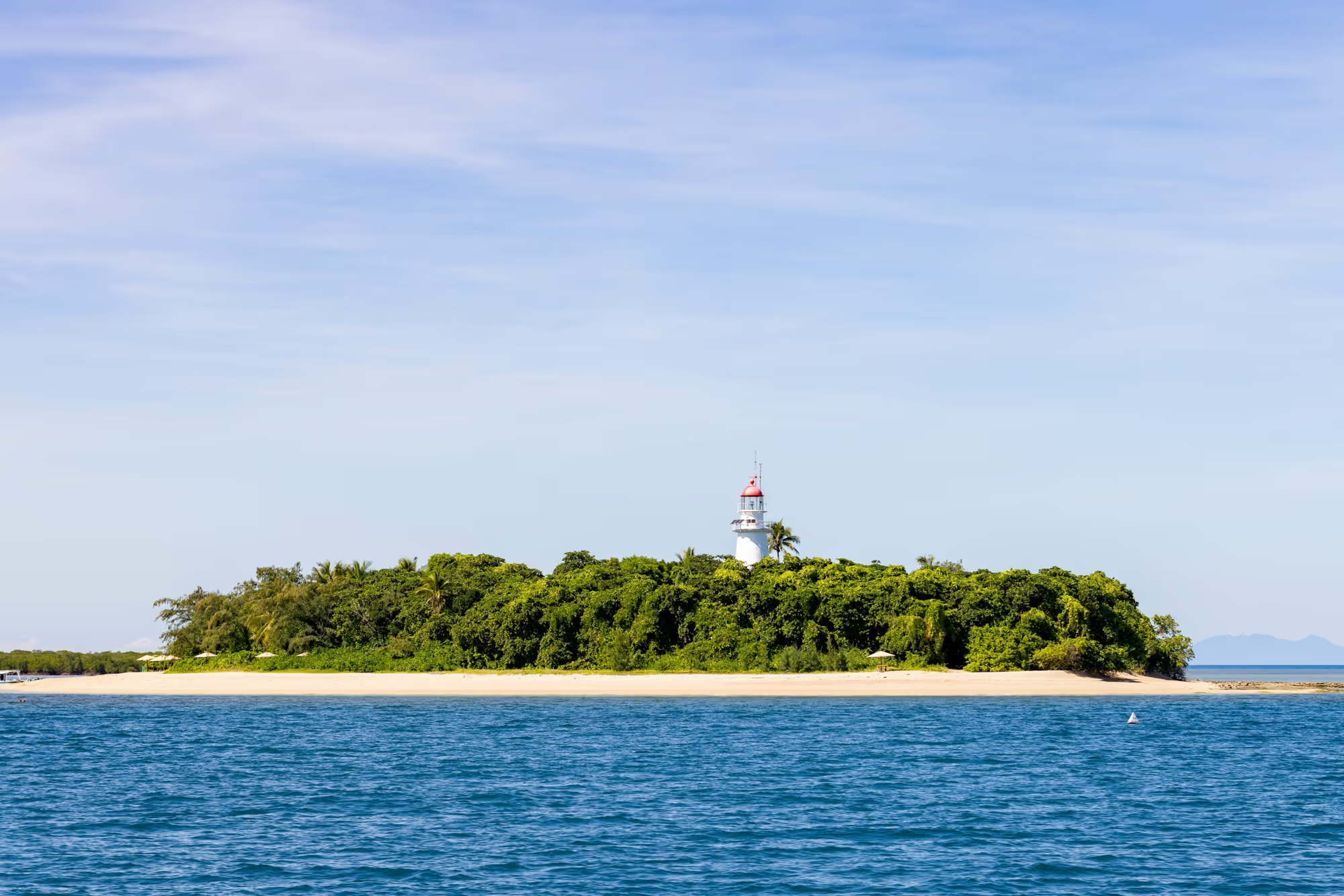
Situated 15km north-east of Port Douglas Low Isles is a 4 acre coral cay surrounded by 55 acres of reef.

Your experience can be as educational as it is relaxing - many activities are available for your participation. Our passionate Reef Biosearch marine biologists are ready to share an amazing day of discovery with engaging activities, all included in your day.

The two small islands are separated with one common reef. The larger of the two, Woody Island, is uninhabited except for a large bird population. It is a vital habitat for many species.
Low Isles - A Dynamic Reef Environment

The Low Isles coral cay is a living example of the dynamic nature of an inshore ecosystem. Situated close to the mainland, inshore reefs are naturally exposed to a wider range of environmental conditions, including increased nutrients, fine sediments, and lower water clarity. Major weather events, such as cyclones and flooding can drive dramatic shifts in overall reef composition. For this reason, inshore reefs are home to a distinct community of corals, fish, and plants able to adapt to the changing conditions.

Colourful parrotfish, rabbitfish and surgeonfish are among the commonly encountered herbivores at Low Isles, actively grazing on patches of algae. Sea cucumbers can be found on the seafloor below, helping to cycle nutrients, while butterflyfish glide through the reef, spreading nutrients and improving coral resilience. Damselfish, trevally, coral trout, and fusiliers are just a few of the other frequently encountered reef inhabitants.

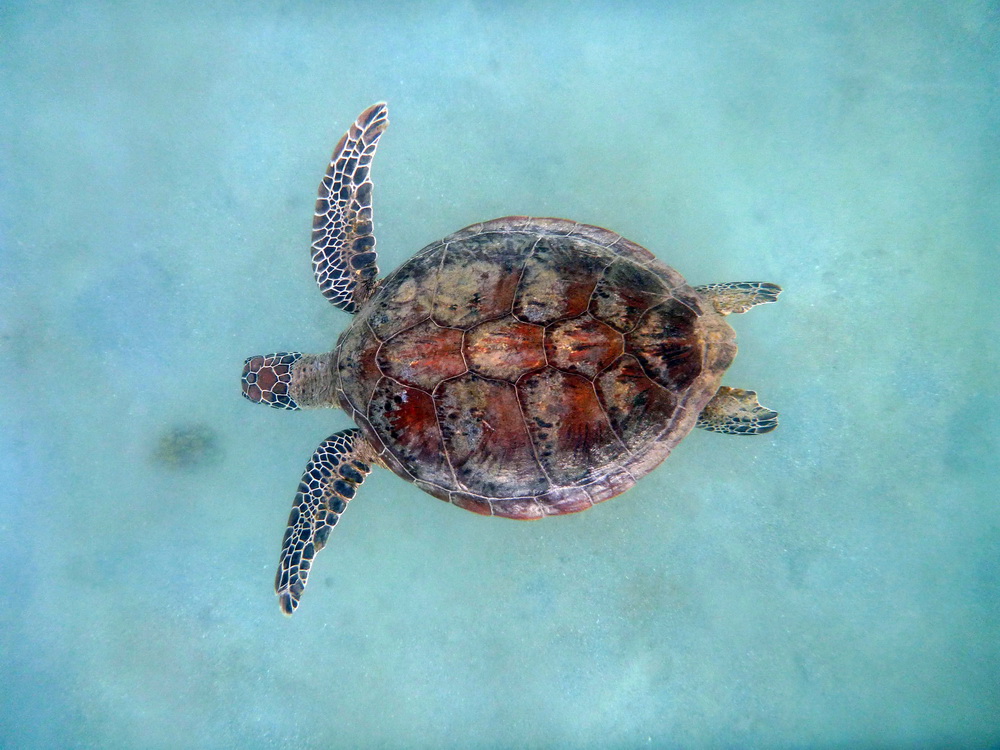
The Low Isles ecosystem extends beyond the coral reef. Seagrass beds across the intertidal sandflats provide an important food source for green turtles and dugongs, while mangroves at Woody Island serve as a nursery for juvenile fish and crustaceans. Together, these interconnected habitats support the Low Isles ecosystem.

A Little bit of Island history

In 1770 Captain James Cook described Low Isles as a "small low island" and was officially called Low Isles in 1819.

The Aboriginal people know these islands as Wungkun. It is an important Indigenous and cultural site for the KuKu Yalanji and Yiragandi people as the sea country for both groups overlaps at Low Isles.

Weather data has been gathered from the island since 1887 and the historic lighthouse has been operating since 1878.

In 1928 it was the base for the first scientific study of a coral reef anywhere in the world, examining the structure and ecology of the surrounding reef. Many current theories of coral reef ecology are based on the findings of this early expedition.

Quicksilver commenced the first daily cruises to Low Isles in 1979 and in 2000, the Low Isles Heritage Walk was officially opened.

Low Isles (Location: 145.5592°E, 16.3842°S, 3M AS)

Situated 15km north-east of Port Douglas Low Isles is a 4 acre coral cay surrounded by 55 acres of reef.

Your experience can be as educational as it is relaxing - many activities are available for your participation. Our passionate Reef Biosearch marine biologists are ready to share an amazing day of discovery with engaging activities, all included in your day.

The two small islands are separated with one common reef. The larger of the two, Woody Island, is uninhabited except for a large bird population. It is a vital habitat for many species.

Low Isles - A Dynamic Reef Environment

The Low Isles coral cay is a living example of the dynamic nature of an inshore ecosystem. Situated close to the mainland, inshore reefs are naturally exposed to a wider range of environmental conditions, including increased nutrients, fine sediments, and lower water clarity. Major weather events, such as cyclones and flooding can drive dramatic shifts in overall reef composition. For this reason, inshore reefs are home to a distinct community of corals, fish, and plants able to adapt to the changing conditions.

Colourful parrotfish, rabbitfish and surgeonfish are among the commonly encountered herbivores at Low Isles, actively grazing on patches of algae. Sea cucumbers can be found on the seafloor below, helping to cycle nutrients, while butterfly glide through the reef, spreadin nutrients and improving coral resilience. Damselfish, trevally, coral trout, and fusiliers are just a few of the other frequently encountered reef inhabitants.

The Low Isles ecosystem extends beyond the coral reef. Seagreass beds across the intertidal sandflats provide an important food source for green turtles and dugongs, while mangroves at Woody Island serve as a nursery for juvenile fish and crustaceans. Together, these interconnected habitats support the Low Isles ecosystem.

A Little Bit of Island History

In 1770 Captain James Cook described Low Isles as a "small low island" and was officially called Low Isles in 1819.

The Aboriginal people know these islands as Wungkun. It is an important Indigenous and cultural site for the KuKu Yalanji and Yiragandi people as the sea country for both groups overlaps at Low Isles.

Weather data has been gathered from the island since 1887 and the historic lighthouse has been operating since 1878.

In 1928 it was the base for the first scientific study of a coral reef anywhere in the world, examining the structure and ecology of the surrounding reef. Many current theories of coral reef ecology are based on the findings of this early expedition.

Quicksilver commenced the first daily cruises to Low Isles in 1979 and in 2000, the Low Isles Heritage Walk was officially opened.

Snorkellers have the opportunity to join organised snorkel expeditions and view the creatures of the reef under the guidance of a Marine Biologist.

Please be aware that snorkelling can be a strenuous activity. Please use caution and inform our crew on the day of any medical conditions.

Low Isles - Lighthouse

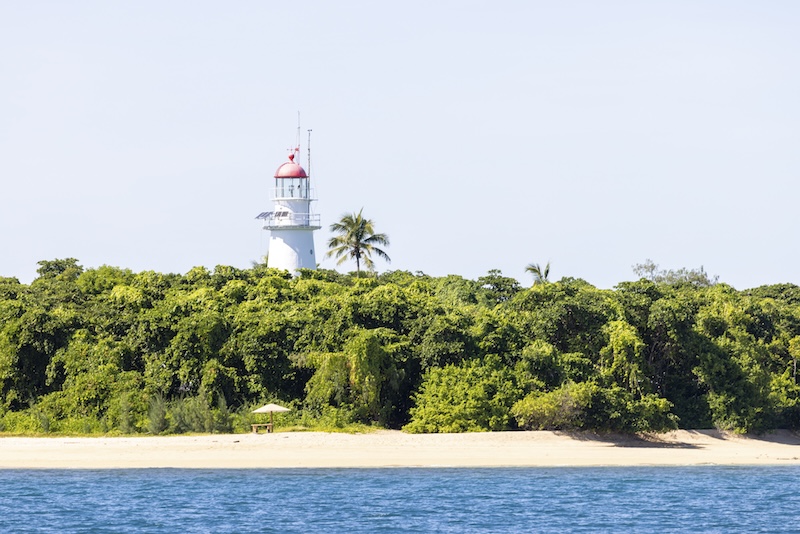
The historic, heritage listed lighthouse was completed in 1878 and since then has guided ships through the main shipping channel between Port Douglas and Cairns.

The lighthouse's 18 metre tower was constructed on a timber frame with a galvanised sheath and interestingly, the Low Isles lighthouse was the first in Queensland to have porthole windows. A timber staircase leads to the lantern room.

Originally oil burners were used to light the way, but over the year with new technology the lighthouse continues to be upgraded and in 1993 solar conversion made it into a self-contained beacon.

The original 1878 lens for the light can today been seen on display in the Court House Museum, Port Douglas. The lightstation is controlled by the Queensland Parks and Wildlife Service.

Low Isles - Lighthouse

The historic, heritage listed lighthouse was completed in 1878 and since then has guided ships through the main shipping channel between Port Douglas and Cairns.

The lighthouse's 18 metre tower was constructed on a timber frame with a galvanised sheath and interestingly, the Low Isles lighthouse was the first in Queensland to have porthole windows. A timber staircase leads to the lantern room.

Originally oil burners were used to light the way, but over the year with new technology the lighthouse continues to be upgraded and in 1993 solar conversion made it into a self-contained beacon.

The original 1878 lens for the light can today been seen on display in the Court House Museum, Port Douglas. The lightstation is controlled by the Queensland Parks and Wildlife Service.

Year First Constructed:

1874

Automated:

1993

Foundation:

Concrete

Construction:

Timber frame clad with galvanised iron

Tower Shape:

Conical, gallery, lantern

Markings / Pattern:

White, red dome

Height / Focal Height:

18m (60 ft) / 20m (65 ft)

Original Lens:

Chance Brothers 3rd order (500 mm) dioptric

Current Lens:

VRB-25

Intensity

49,212 cd

Range:

17 nautical miles (31km; 20mi)