""

The Great Barrier Reef History And Information

348,000km2

Marine Park Est. 1975

on the UNesco World heritage list since 1981

2,900 reefs
600 continental islands
300 coral cays

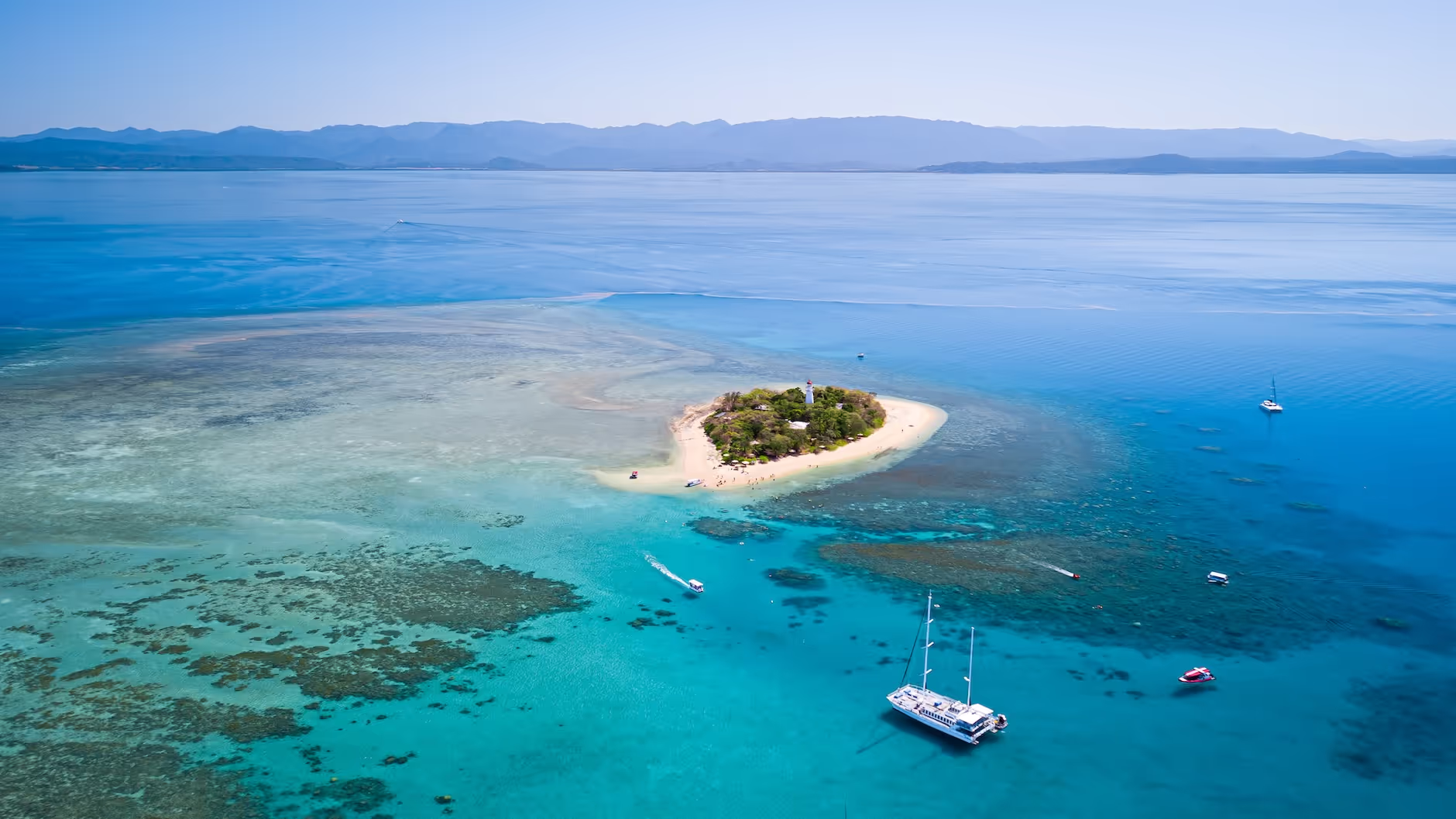
Low Isles is but one of over 900 islands within the Great Barrier Reef Marine Park. The Great Barrier Reef is undisputed as one of the world’s most important natural assets and is also one of the largest UNESCO marine heritage sites in the world. It is the largest natural feature on earth stretching more than 2,300km along the north-east coast of Queensland, Australia. To put it in perspective, it covers an area about the same size as the United Kingdom, half the size of the state of Texas or the length of the entire Japanese island chain. It is the only natural structure that can be seen from outer space.
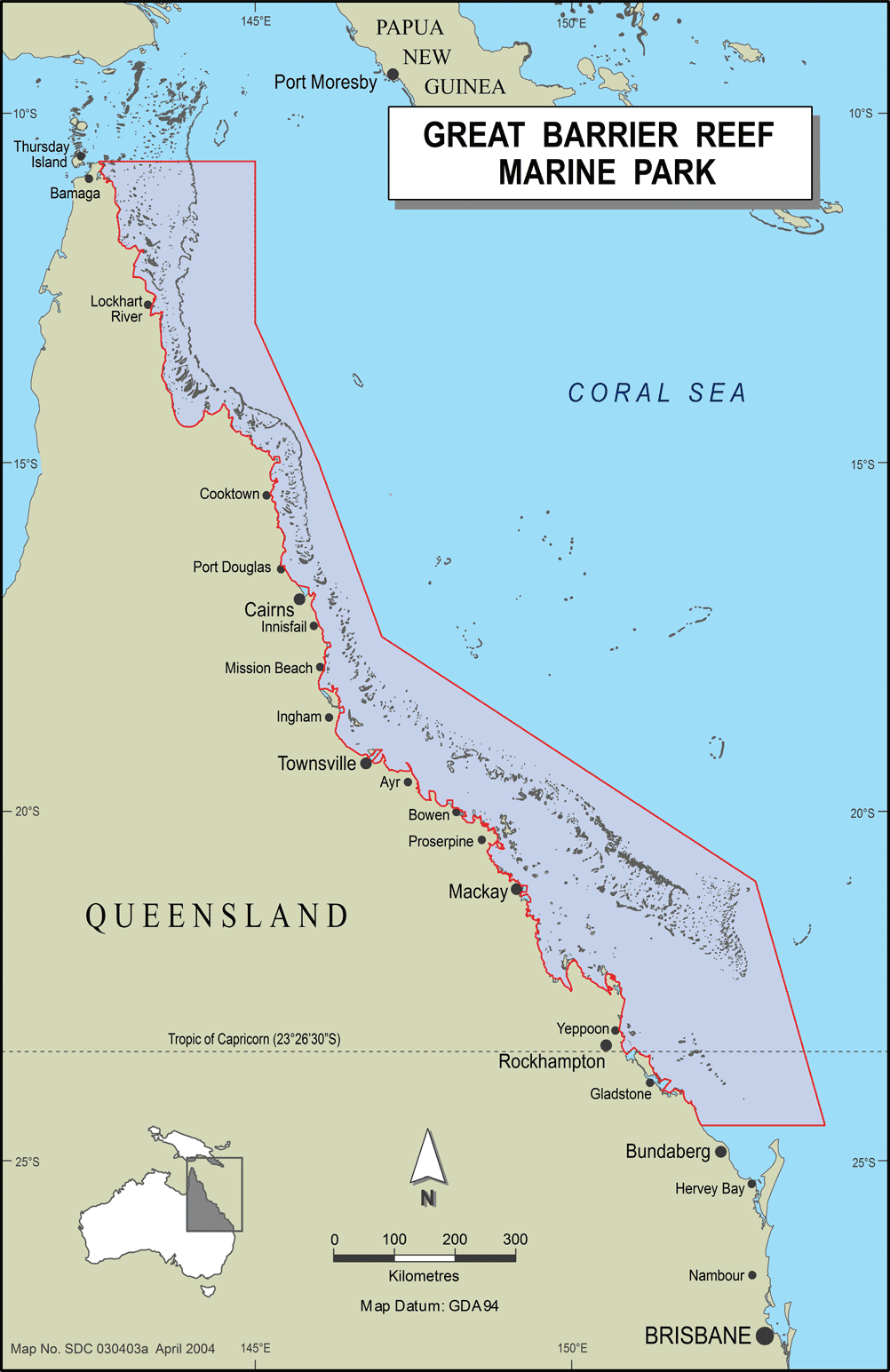
The Great Barrier Reef is a series of over 2,900 individual reefs, stretching from the tip of Cape York in the north to lady Elliot Island in the south. Covering over 348,000km2, it comprises fringing and barrier reefs, continental islands, coral cays and 70 different bio-regions, making it the most ecologically diverse system in the world.

Although coral reefs have been around for over 500 million years, the Great Barrier Reef is relatively young 500,000 years, and this modern form is only 8,000 years old, having developed after the last ice age.

This World Heritage listed marine park supports the greatest concentration of life on the planet with over 1,500 species of fish, 400 different corals and 6 of the worlds 7 species of sea turtles are found here. Whales are often encountered in these waters from May to September.

Visit the Great Barrier Reef Marine Park Authority to learn  about some fascinating GBR facts.
Low Isles is but one of over 900 islands within the Great Barrier Reef Marine Park. The Great Barrier Reef is undisputed as one of the world’s most important natural assets and is also one of the largest UNESCO marine heritage sites in the world. It is the largest natural feature on earth stretching more than 2,300km along the north-east coast of Queensland, Australia. To put it in perspective, it covers an area about the same size as the United Kingdom, half the size of the state of Texas or the length of the entire Japanese island chain. It is the only natural structure that can be seen from outer space.

The Great Barrier Reef is a series of over 2,900 individual reefs, stretching from the tip of Cape York in the north to lady Elliot Island in the south. Covering over 348,000km2, it comprises fringing and barrier reefs, continental islands, coral cays and 70 different bio-regions, making it the most ecologically diverse system in the world.
Although coral reefs have been around for over 500 million years, the Great Barrier Reef is relatively young 500,000 years, and this modern form is only 8,000 years old, having developed after the last ice age.

This World Heritage listed marine park supports the greatest concentration of life on the planet with over 1,500 species of fish, 400 different corals and 6 of the worlds 7 species of sea turtles are found here. Whales are often encountered in these waters from May to September.

Visit the Great Barrier Reef Marine Park Authority to learn  about some fascinating GBR facts.
Low Isles is but one of over 900 islands within the Great Barrier Reef Marine Park. The Great Barrier Reef is undisputed as one of the world’s most important natural assets and is also one of the largest UNESCO marine heritage sites in the world. It is the largest natural feature on earth stretching more than 2,300km along the north-east coast of Queensland, Australia. To put it in perspective, it covers an area about the same size as the United Kingdom, half the size of the state of Texas or the length of the entire Japanese island chain. It is the only natural structure that can be seen from outer space.

The Great Barrier Reef is a series of over 2,900 individual reefs, stretching from the tip of Cape York in the north to lady Elliot Island in the south. Covering over 348,000km2, it comprises fringing and barrier reefs, continental islands, coral cays and 70 different bio-regions, making it the most ecologically diverse system in the world.

Although coral reefs have been around for over 500 million years, the Great Barrier Reef is relatively young 500,000 years, and this modern form is only 8,000 years old, having developed after the last ice age.

This World Heritage listed marine park supports the greatest concentration of life on the planet with over 1,500 species of fish, 400 different corals and 6 of the worlds 7 species of sea turtles are found here. Whales are often encountered in these waters from May to September.

Visit the Great Barrier Reef Marine Park Authority to learn  about some fascinating GBR facts.